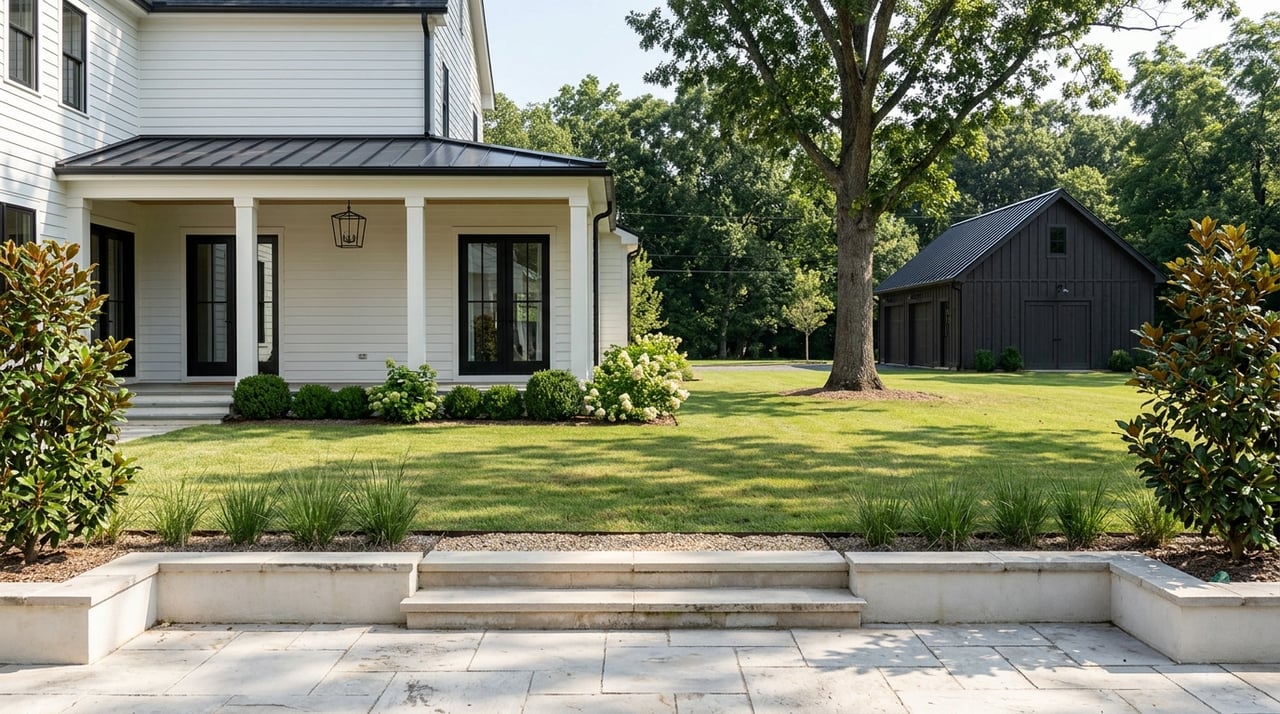
If you are selling a country estate in College Grove, you are not competing with a typical suburban listing. Buyers in this segment look closely at the land, infrastructure, and overall readiness of the property, not just the main house. When you understand what matters most and prepare accordingly, you can position your estate more effectively in a market where buyers have more choices. Let’s dive in.
College Grove Estate Market Context
College Grove sellers operate in Williamson County’s premium market, where pricing sits well above the broader regional average. In Q1 2026, the median residential price in Williamson County was $1,065,000, compared with $507,418 across the nine-county region.
That gap matters because it reinforces a simple point: your property should be evaluated within the local estate and acreage market, not against standard subdivision homes. Williamson County also recorded 300 farm, land, and lot closings in 2024, which shows that acreage properties are active here, but they remain a specialized segment.
The broader Greater Nashville market is also more balanced than it was during the pandemic years. In April 2026, the region posted 3,100 closings, 14,677 total inventory, 57 days on market, and about six months of available inventory, giving buyers more room to compare options.
Why Country Estates Sell Differently
A country estate buyer is often evaluating two assets at once: the residence and the land. That means your pricing, preparation, and marketing all need to tell a more complete story than a standard home sale would.
In College Grove, buyers may focus on practical details like usable pasture, drainage, road access, gates, trailer circulation, water sources, and outbuilding condition. Even when the house shows beautifully, those land-related features can shape how buyers view value and how quickly they move forward.
If your property includes equestrian-style features, buyers will also look for function over appearance. Safe fencing, organized paddocks, workable barn layouts, and room for future use tend to matter more than cosmetic touches alone.
Start With Safety and Function
Before you think about photos or launch timing, focus on the items buyers will notice first during a showing or inspection. For acreage properties, that usually means correcting issues that affect safety, access, and daily use.
Fence lines and gates should be in sound condition and easy to operate. Extension guidance on horse properties notes that fencing should be safe, durable, functional, and visible, with perimeter fences around 5 feet high and without sharp edges.
Barns and outbuildings also need to present as useful, not just attractive. Ventilation, moisture control, and practical layout matter because buyers often assess whether these structures are ready for immediate use or will require updates soon after closing.
You should also review roads, gravel drives, drainage patterns, and gate clearance. On a country estate, these are not secondary details. They are part of how buyers judge the property’s upkeep and long-term usability.
Review Well and Water Details Early
Private water systems are common on rural properties, and buyers often want clarity before they commit. In Tennessee, private water supplies are usually wells or springs, and private-well water quality is not state-regulated.
The state recommends bacterial testing every year and chemical testing every two years. There is no statewide private-water sampling requirement, but lenders or buyers may request specific tests during the transaction.
That is why early preparation helps. If you already have recent water records or test results, you can answer questions faster and reduce uncertainty during due diligence.
Address Septic Concerns Before Listing
Septic systems deserve the same proactive attention. Tennessee guidance says any installation or repair of a faulty septic system requires a construction permit, and maintenance records can become valuable when buyers start reviewing the property.
The Tennessee Department of Health recommends inspecting septic systems every two years if they have a pump and every four years if they do not. The state also recommends pumping every four years and keeping records of maintenance.
If you have warning signs like slow drains, backups, standing water, or odor, address them before the property goes live. Problems like these can stall a sale, affect buyer confidence, or complicate negotiations once inspections begin.
Build a Strong Pre-Listing Packet
For a College Grove country estate, documentation is part of the presentation. Buyers are often more comfortable making decisions when they can review the land layout, system records, and property details in an organized way.
A strong pre-listing packet may include:
- Survey or plat
- Recorded easement information
- Septic permits
- Septic pump or maintenance records
- Well reports or water test results
- HOA or planned unit development documents, if applicable
This matters for more than convenience. Tennessee septic permitting requires details such as lot size, bedroom count, water-use amounts, property lines, house site, water source location, driveway, and utilities, which shows how useful a clear site map and complete records can be.
Understand Tennessee Disclosure Expectations
Tennessee requires most sellers to provide a disclosure statement. According to the state’s Healthy Homes guidance, that disclosure covers known defects, environmental hazards, flood or drainage issues, encroachments, and unpermitted work.
For estate properties, this is especially important because there are often more structures, systems, and land features involved. Clear disclosure helps buyers evaluate the property accurately and can reduce surprises later in the process.
The state also notes that failure to disclose can cancel a contract or lead to legal action. If the estate is located in a planned unit development, Tennessee law also requires disclosure of that fact and access to the community’s governing documents upon request.
Price Against the Right Comparables
One of the biggest mistakes sellers make is comparing an estate property to nearby homes that happen to share a ZIP code. A country estate in College Grove should be priced against relevant estate, acreage, and land-influenced sales, not standard neighborhood inventory.
That distinction is important in Williamson County, where the market behaves differently from the region overall. The county’s premium pricing and separate tracking of farm, land, and lot activity both support the need for a specialized pricing approach.
Acreage, usable land, outbuildings, access, and utility infrastructure all influence value. If those features are strong and well documented, they can support pricing more effectively than generic square-foot comparisons.
Time the Launch for Readiness
In a market with more inventory and a longer average time on market, readiness matters. Buyers can compare more listings now, which makes them less likely to overlook deferred maintenance or incomplete presentation.
That means the best launch is usually not the fastest possible launch. It is the moment when the property has been cleaned up, the key systems have been reviewed, the records are assembled, and the visual marketing is ready.
In April 2026, Greater Nashville REALTORS® noted steady demand across the region and pointed to strategic pricing as a key factor for attracting motivated buyers. For a country estate, that strategy works best when it is paired with strong preparation.
Market the Land, Not Just the House
A beautiful interior matters, but country estate buyers want to understand the full property. Your marketing should help them visualize how the land functions and why the estate stands apart.
That often means showcasing:
- Aerial and drone imagery
- A clear site map
- Pasture and fence layouts
- Barn and outbuilding photos
- Access points and drive approach
- Notes on usable acreage and water sources
- Details on horse-ready infrastructure, if fully supported
Be careful with how the property is positioned. If the estate is not truly horse-ready and documented, it is often better to present it as an acreage or country estate with equine potential rather than making stronger claims that the infrastructure does not fully support.
What Buyers Notice During Showings
When buyers tour a country estate, they are often looking beyond finishes and décor. They may be asking themselves whether the property feels easy to own, easy to maintain, and ready for the lifestyle they want.
They will likely notice whether gates open smoothly, whether the drive feels accessible, whether pastures appear usable, and whether drainage issues are visible. They may also pay close attention to how close records and answers seem to be at hand.
That is why thoughtful preparation can create real momentum. When the property feels organized, functional, and transparent, buyers can spend less time worrying about unknowns and more time connecting with the opportunity.
A Smarter Selling Strategy for College Grove
Selling a country estate in College Grove takes more than listing a beautiful home. It requires a strategy that respects the property’s complexity, supports value with documentation, and presents the land and improvements in a way today’s buyers can understand quickly.
At Exceptional Living Group, that means combining local market knowledge with high-touch seller guidance, elevated presentation, and a polished go-to-market plan tailored to premium Williamson County properties. If you are thinking about your next move, connect with Bruce Jones to request a confidential consultation.
FAQs
What makes selling a country estate in College Grove different from selling a standard home?
- Buyers often evaluate the land, access, fencing, water, septic, and outbuildings as closely as they evaluate the house, so preparation and pricing need to reflect the full property.
What should sellers fix first on a College Grove acreage property?
- Start with safety and function, including fences, gates, drainage, access roads, septic concerns, and water-related issues.
Do you need well testing before listing a country estate in Tennessee?
- Not always by state requirement, but Tennessee recommends annual bacterial testing and chemical testing every two years, and buyers or lenders may request testing.
Should you inspect a septic system before selling a College Grove estate?
- Pre-listing attention is wise because maintenance records, recent service, and resolving warning signs early can help prevent delays during due diligence.
How should a country estate in College Grove be priced?
- It should be priced using relevant estate, acreage, and land-influenced comparables rather than standard subdivision home sales.
When should you market a property as an equestrian estate in College Grove?
- Only when the infrastructure is truly horse-ready and documented; otherwise, it is better to describe the property as a country estate or acreage property with equine potential.